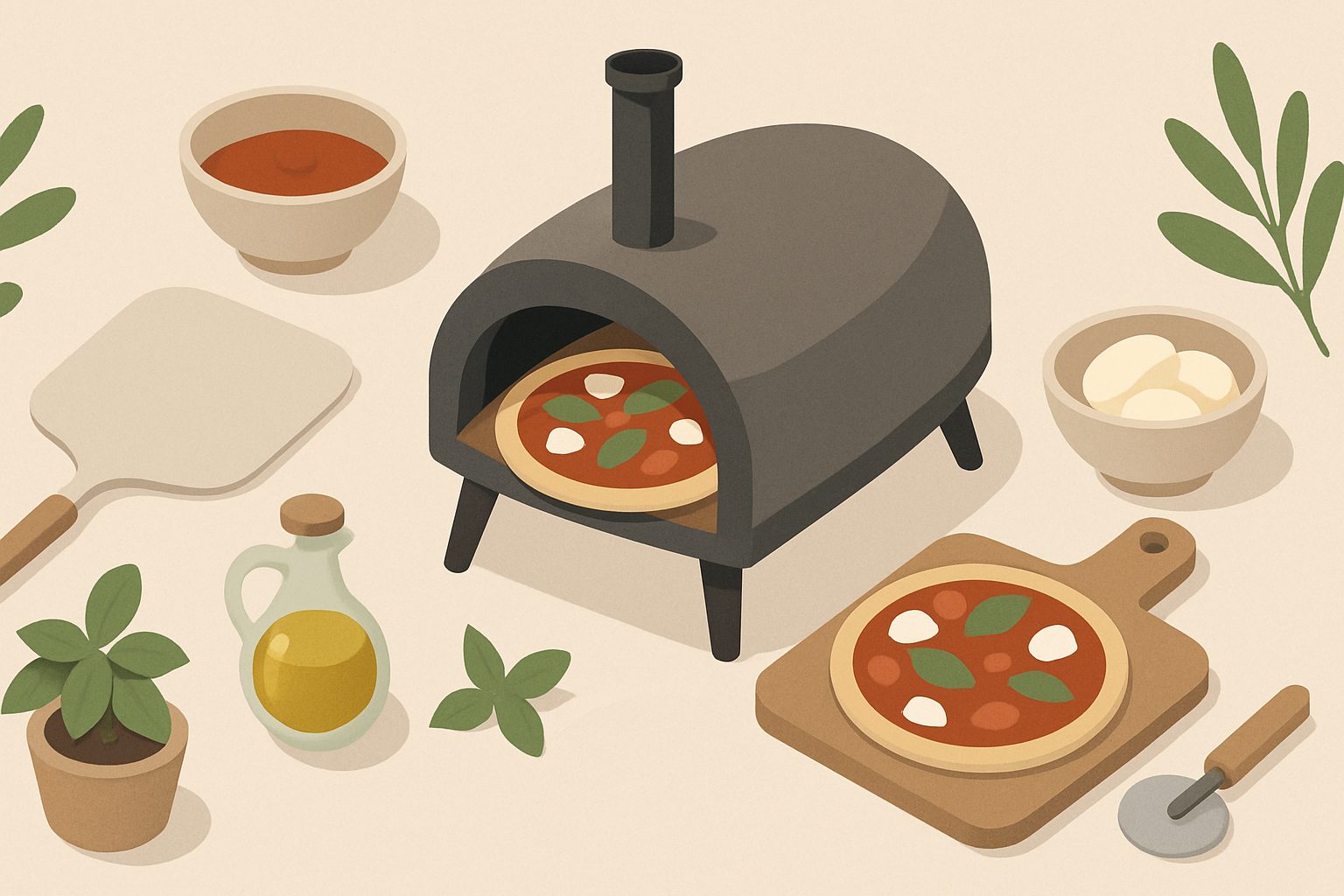
How to Season and Care for Your Pizza Oven Stone: UK Guide
A pizza oven stone is one of the few components that actually improves with age—but only if you treat it properly from day one. Many people buy a wood-fired pizza oven, install the stone, and wonder why it cracks, discolours, or performs poorly. The answer is almost always improper seasoning or maintenance. This guide covers everything you need to know to keep your stone in top condition for years.
Why Seasoning Your Stone Matters
Pizza oven stones—typically made from cordierite or firebrick—are porous. When you season them, you're not applying a coating like you would a cast-iron pan. Instead, you're gradually building up a layer of baked-on oils and residue that prevents moisture penetration and creates a naturally non-stick surface. This seasoning layer also helps distribute heat more evenly and protects the stone from thermal shock.
New stones are especially vulnerable. They absorb moisture readily, and rapid heat changes can cause cracking. Proper seasoning fills those pores and hardens the surface, making the stone far more durable.
The Curing Process: Step by Step
Start your seasoning as soon as your oven is installed. The traditional process takes several weeks but isn't demanding.
Week 1: Low-temperature burns
Light small fires using dry softwood—pine or fir works well. Keep temperatures below 100°C by cracking the oven door and limiting wood. Burn for 1–2 hours daily. This allows moisture to escape gradually rather than explosively.
Week 2–3: Gradual temperature increase
Increase to 150°C, then 200°C over the following two weeks. Still use small fires with the door slightly ajar. You'll notice the stone darkening and developing a patchy appearance—this is normal and desirable. Don't worry about the colour inconsistency.
Week 4 onwards: Normal use
By week four, most moisture has been driven out. You can now use the oven normally, gradually reaching full temperature. The stone will continue to improve over months and years with regular use. Many experienced pizza oven owners say their stones perform best after 12 months of consistent cooking.
Skip the rush. I've seen people try to accelerate this by firing hot immediately. Don't. Cracked stones are expensive to replace and ruin pizzas in the meantime.
Cleaning Your Stone: The Right Way
One of the biggest mistakes is using soap and water. Detergent creates a barrier on the stone and can be absorbed into the porous surface, affecting flavour and the seasoning layer.
For fresh debris after cooking:
Let the stone cool for at least an hour. Use a stiff brush—a brass or steel grill brush works well—to sweep away ash and burnt bits. This is enough for routine cleaning.
For stubborn spots:
A dry scraper or putty knife removes stuck dough or burnt patches. Scrape gently to avoid gouging the surface. If you must use water, use it sparingly: damp a cloth, wipe quickly, then dry immediately with another cloth. Never soak the stone.
For deep cleaning (a few times a year):
A weak solution of white vinegar and minimal water can shift discolouration. Apply with a cloth, wipe the stone, then dry thoroughly. Vinegar is slightly acidic and won't leave residue like soap does.
Avoid commercial oven cleaners entirely. They're designed for stainless steel and do more harm than good to porous stone.
Preventing Cracks and Damage
Thermal shock is your biggest enemy. Avoid placing cold food or wet hands directly on the hot stone—both create stress. If you're cooking with moisture-heavy ingredients like tomatoes with liquid, let some of that moisture evaporate before contact with the stone.
Never pour cold water on a hot stone to clean it. The sudden temperature change will crack it almost instantly.
During winter months, if you're not using your oven regularly, cover it with a waterproof oven cover or hood. Repeated freezing and thawing can slowly damage the stone over time. This is particularly important in Northern regions where temperatures fluctuate.
If your oven is exposed to heavy rain, ensure water drains properly around it. Pooling water that seeps into the base eventually affects the stone above.
Spotting Problems Early
Small cracks occasionally appear even with perfect care—cordierite stone is prone to stress fractures in the first year or two. As long as the crack is hairline and the stone isn't actively breaking apart, cooking is usually still safe. Monitor it over subsequent weeks. If it spreads, replacement is the sensible option.
Discolouration is cosmetic and doesn't affect performance. Uneven wear or slight concaving from years of use is also normal and harmless.
When It's Time to Replace Your Stone
With proper care, a pizza oven stone lasts 5–10 years or more. However, if major cracks develop, if large sections break away, or if the stone becomes so worn that heat distribution suffers noticeably, replacement is necessary.
Replacement cordierite stones are widely available and reasonably priced. Installation is straightforward: measure your oven carefully before ordering to ensure the new stone fits perfectly. It's worth sourcing a locally-made or European stone if possible, as they often have better thermal properties than cheaper imports.
The Long Game
A well-seasoned stone rewards consistency. Use your oven regularly, avoid sudden temperature changes, and clean it simply. Over time, the stone develops character—small marks and variations that reflect its history. That patina is a sign of a stone that's been properly cared for and will serve you for years.
More options
- Ooni Pizza Ovens & Accessories (Amazon UK)
- Gozney Pizza Ovens (Amazon UK)
- Pizza Oven Tools & Accessories Bundle (Amazon UK)
- Kiln Dried Hardwood & Pizza Oven Pellets (Amazon UK)
- Ninja Woodfire & Budget Pizza Ovens (Amazon UK)