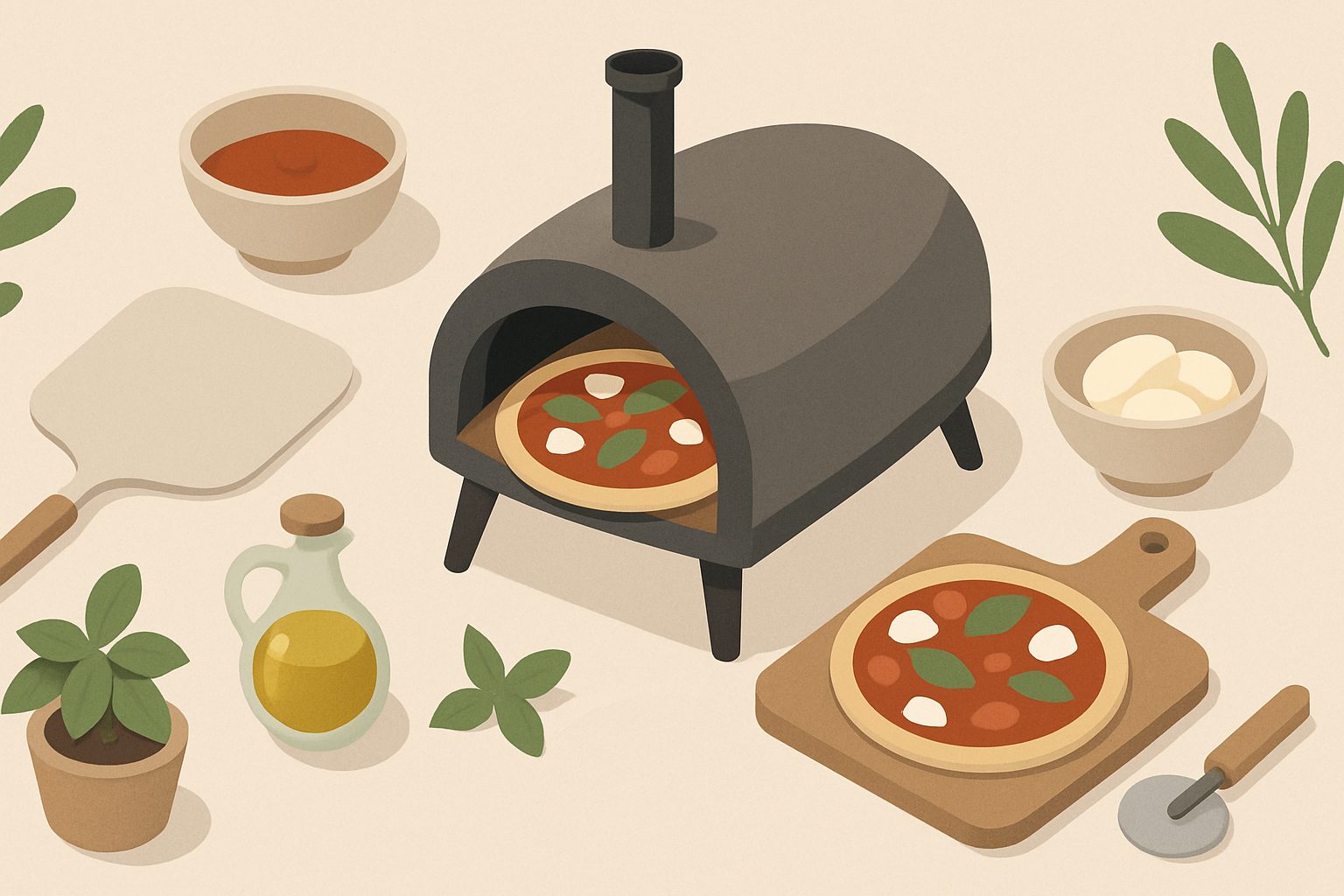
How to Use an Outdoor Pizza Oven for the First Time: Step-by-Step UK Guide
Getting your new outdoor pizza oven fired up for the first time can feel daunting. You've invested in the kit, it's sitting in your garden, and now you're wondering whether you're about to burn down the neighbourhood or produce something inedible. The reality is far friendlier: outdoor pizza ovens are remarkably forgiving, and once you understand the basics, you'll be producing restaurant-quality pizzas in a few weeks.
Cure Your Pizza Stone First
Before you even think about lighting a fire, your oven's stone or brick interior needs curing. This applies whether you've bought a new traditional clay oven or a modern steel model with a ceramic base—the process protects the material from thermal shock and removes moisture.
Start by lighting a small fire—just kindling and newspaper—and run it for about 30 minutes. Let the oven cool completely. The next day, repeat with a slightly larger fire. Continue this pattern daily for a week, gradually increasing the fire size and duration. By day seven, you should be able to run a moderate fire for two hours. This slow hardening process prevents cracking and extends your oven's lifespan significantly. Yes, it's tedious, but you only do it once.
Fuel Choice Matters
Hardwood is non-negotiable for pizza ovens. Softwoods like pine and spruce create excessive smoke, soot your oven, and leave your pizzas tasting of resin. Stick to kiln-dried hardwoods: oak, ash, birch, or beech work brilliantly. Avoid treated timber entirely.
Split logs should be roughly the thickness of your wrist and dried for at least a year. Moisture content matters—aim for below 20%. Damp wood smoulders, produces thick smoke, and won't reach the high temperatures you need. In the UK's damp climate, storing wood under cover is essential.
Getting to Temperature
Temperature control is fundamental. For traditional Neapolitan-style pizzas, you're aiming for 300–350°C. For thicker crust styles, 200–250°C is fine. Cold stone means soggy bases; hot stone means charred crust before the topping cooks.
Light your fire towards the back or side of the oven, not directly in the centre. Once the kindling catches, gradually add split logs. Leave the oven door or opening unobstructed so heat can circulate. After 45 minutes to an hour, your oven should have reached 250°C. Keep feeding the fire, and within 90 minutes you'll likely be at 300°C or higher.
The stone will develop grey or white ash on the surface—this is normal and insulates the oven. Don't obsess about a thermometer reading; experienced pizza makers judge temperature by how the oven looks and sounds. A properly hot oven has a hollow roar when you listen at the opening.
Preparing Your Launch Area
Before your oven reaches full temperature, prepare your workspace. You'll need a work surface at roughly the same height as your oven opening (most shop-bought ovens are designed with this in mind). Dust your pizza peel—wooden peels are traditional and cheaper, but aluminium peels are easier to use when learning—generously with flour or polenta. This prevents sticking.
Have your dough ready. Room-temperature dough is easier to stretch than cold. If you're new to this, buy quality dough from a local pizzeria or use a reliable recipe; homemade is better, but don't overcomplicate your first attempts.
Launching Your Pizza
Stretch your dough to roughly 30–35 cm diameter (thicker is more forgiving than thin). Add sauce and toppings sparingly—overloading slows cooking and creates a soggy base. Less is genuinely more with pizza ovens.
Once your peel is loaded, you've got one chance. Open the oven door or clear the opening and slide the peel quickly but confidently onto the stone. Jerk the peel sharply forward to release the pizza, then pull the peel out immediately. A hesitant launch leaves the pizza stuck halfway; a confident one lands cleanly.
Turning and Watching
A pizza at 300°C takes 60–90 seconds per side. Most ovens have a hot spot, so your pizza won't cook evenly if left still. After about 45 seconds, use a peel to rotate it 180 degrees. After another 45 seconds, carefully flip it (this requires practice; some beginners prefer to pull it out and flip it on the peel first). Total cooking time is typically 90–120 seconds.
You're aiming for leopard-spotted charring on the crust, not uniform browning. Spots are a sign the oven is doing its job.
Cooling and Maintenance
Once you've finished cooking, let your oven cool naturally. Don't close doors or covers while it's still hot—trapped steam can damage the stone. Allow 2–3 hours before closing it up. In wet UK weather, invest in a good cover to prevent water ingress.
Essential Accessories for Beginners
A few inexpensive tools make the learning curve much shorter. A long-handled peel designed for pizza ovens (not the short baking-sheet kind) gives you confidence. An oven thermometer removes guesswork about temperature. A stainless-steel cover protects your investment from rain. A metal fire grate or basket keeps ash away from your cooking surface. None of these are expensive, and all genuinely improve your experience.
The Reality
Your first pizzas might be wonky, burnt, or undercooked. That's fine. By your tenth pizza, you'll understand your oven's quirks. By your thirtieth, you'll be confidently producing results that embarrass your local pizzeria. The learning curve is genuinely shallow—pizza ovens don't require the precision of a home kitchen oven, and they're remarkably forgiving of mistakes.
Start with simple margherita, master the basics, then branch into styles and toppings. You've got this.
More options
- Ooni Pizza Ovens & Accessories (Amazon UK)
- Gozney Pizza Ovens (Amazon UK)
- Pizza Oven Tools & Accessories Bundle (Amazon UK)
- Kiln Dried Hardwood & Pizza Oven Pellets (Amazon UK)
- Ninja Woodfire & Budget Pizza Ovens (Amazon UK)