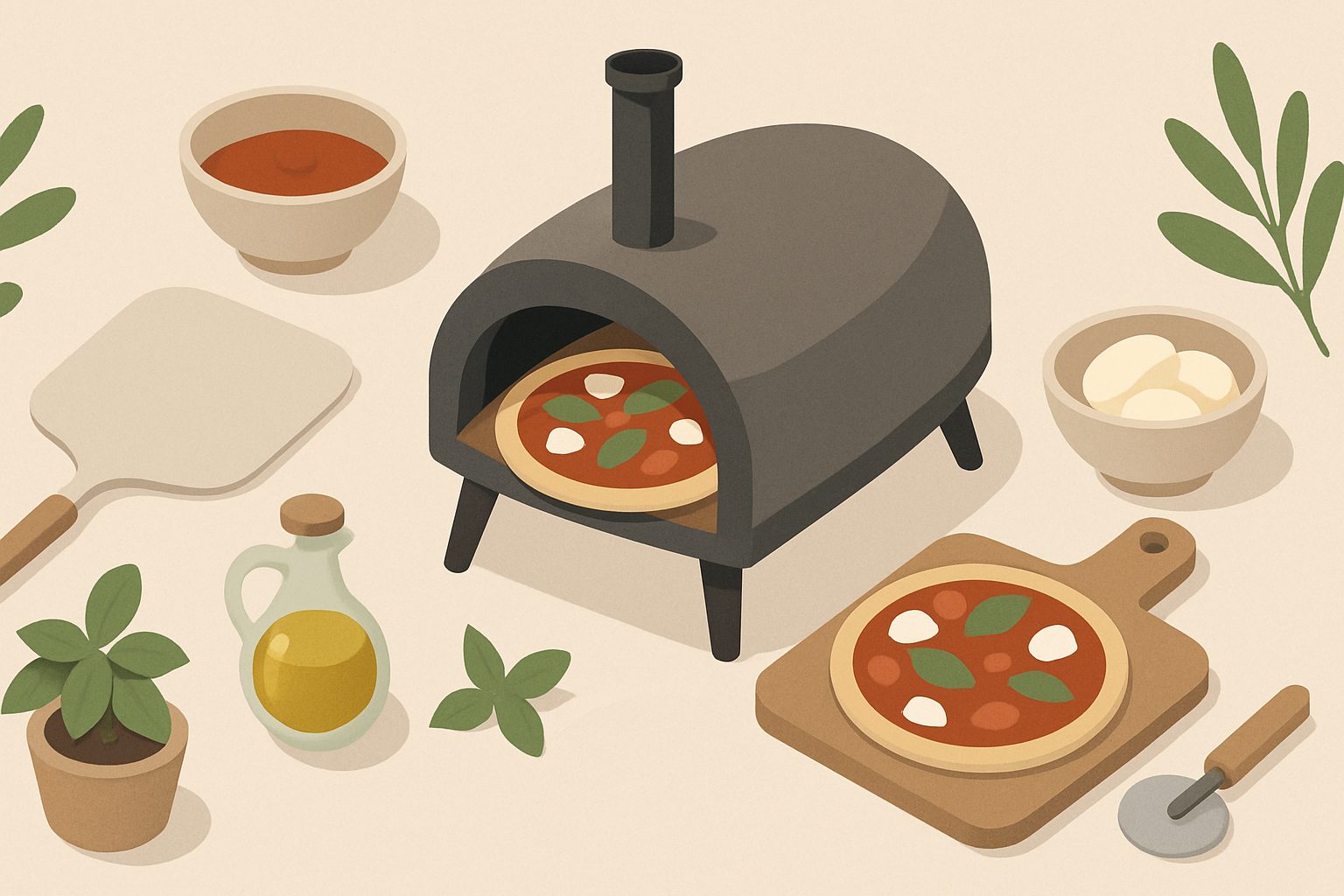
Ooni Karu 16 Review UK: Is It Worth £699 for Home Cooks?
The Ooni Karu 16 sits at an interesting crossroads: it's the smallest wood-fired oven in the Karu range, yet costs £699 and genuinely outperforms ovens half its price. I've used one across two summers, through wet British weather and the occasional heat wave, and it's worth examining whether it earns that price tag for a home cook.
Unboxing and Setup
The Karu 16 arrives as a single unit, fully assembled except for the chimney and door. That's a genuine advantage—no building from bricks, no mortaring. The oven itself weighs about 80kg, which is manageable with help on a trolley, though you'll need a sturdy base. The cast-iron structure feels solid; the steel band holding the dome is tight, and the whole thing sits stable without wobbling.
Setting it up on a garden patio took about 20 minutes. You slot the chimney section (powder-coated steel) onto the threaded post, attach the door, and you're ready. No specialist knowledge needed. The thermometer on the front reads to about 400°C and is honest enough for practical purposes.
First Fire and Heat Response
This is where the Karu 16 shows its credentials. Light a fire in the centre, and it responds quickly. Crumpled paper and kindling ignite easily; the airflow is well-designed. Within 15 minutes, the oven interior is noticeably warm. By 30 minutes, the front dial reads 250°C; by 45 minutes, it's pushing 350°C. That's faster than many traditional brick ovens.
The multi-fuel design—it burns wood, charcoal, or even pellets with an optional hopper—gives genuine flexibility. I've used mostly seasoned oak and ash; avoid soft woods or green wood, which creates creosote and sluggish heating. The fuel grate sits deep enough that ash doesn't spill into cooking space, a thoughtful design detail.
Crust Quality and Heat Retention
The 16-inch cooking surface is genuinely tight. A standard 14-inch pizza fits comfortably with maybe an inch clearance all round. The dome shape is important: it reflects radiant heat downward and sideways, baking the top while the floor heats the base. The result is a crust that browns evenly in 90 to 120 seconds at full temperature—far quicker than a home electric oven, which matters for pizza texture.
I've cooked dozens of pizzas here. A decent room-temperature dough, stretched thin to thick, comes out with a slight char, blistered spots, and a crust that's just soft enough inside. It's not impossible to burn them—the floor temperature can hit 450°C easily—but the learning curve is forgiving compared to commercial deck ovens.
Heat retention is solid. The cast-iron mass means that once the oven is fully preheated, you can cook pizza after pizza with minimal fuel top-up. On a typical evening, I've made eight pizzas with a single fresh log added halfway through. Cool-down is slow, too; the oven stays above 200°C for several hours.
Build Quality and Durability
Cast iron holds heat brilliantly, but it requires maintenance. The Karu 16 is powder-coated rather than painted, which resists rust reasonably well. However, salt air and constant freeze-thaw cycles (UK winters) do take a toll. After two seasons, I've seen minor surface corrosion on the lower sections where moisture sits longest. It's cosmetic, not functional, but worth knowing.
The thermometer is glued on and stopped working after one winter—the gasket degraded and moisture seeped inside. Replacement thermometers are available cheaply, but it's a reminder that outdoor equipment in the UK climate demands routine attention. Covering the oven in winter extends its life considerably.
The door seal works well, though it firms up in cold weather. The stainless-steel chimney doesn't rust, which is the right material choice. Overall, the build is what you'd expect at this price: solid without being bulletproof.
Real Pros
- Speed: heats to cooking temperature faster than most domestic alternatives
- Versatility: wood, charcoal, or pellets mean you can adapt to mood and availability
- Footprint: 16 inches is small enough for a modest garden, large enough for entertaining
- Crust quality: the combination of floor and dome heat genuinely produces restaurant-style results
- Ease of use: no learning curve as steep as proper brick ovens
Real Cons
- Space limitation: two pizzas maximum per batch if you squeeze; eight-pizza entertaining takes time
- Weather dependency: a storm mid-cook means soggy dough and poor results; a cover is essential
- Maintenance: rust prevention and seal replacement are ongoing tasks, not one-time setup
- Cost per pizza: at £699 plus cover, base, and fuel, your per-pizza cost is higher than ordering out—you're paying for the experience and quality
- Weather impact on cook time: heating in winter takes 50% longer than summer
Is It Worth £699?
Yes, if you value speed, crust quality, and the theatre of outdoor cooking. No, if you expect it to save money compared to ordering pizza or cooking indoors. A cheaper oven might work; the Karu 16 is an optimised compromise between price and performance that genuinely delivers.
The real question: will you use it regularly enough to justify the outlay? If entertaining four or more times a season is realistic, and you enjoy the cooking process itself, this oven will earn its place. If you picture occasional impulse use, a smaller model or lower-priced alternative makes more sense.
Compare the Ooni Karu 16 against traditional brick ovens in our [multi-fuel comparison guide], or see how it stacks up in our [Ooni vs Gozney] analysis for alternative takes on the same price band.
More options
- Ooni Pizza Ovens & Accessories (Amazon UK)
- Gozney Pizza Ovens (Amazon UK)
- Pizza Oven Tools & Accessories Bundle (Amazon UK)
- Kiln Dried Hardwood & Pizza Oven Pellets (Amazon UK)
- Ninja Woodfire & Budget Pizza Ovens (Amazon UK)