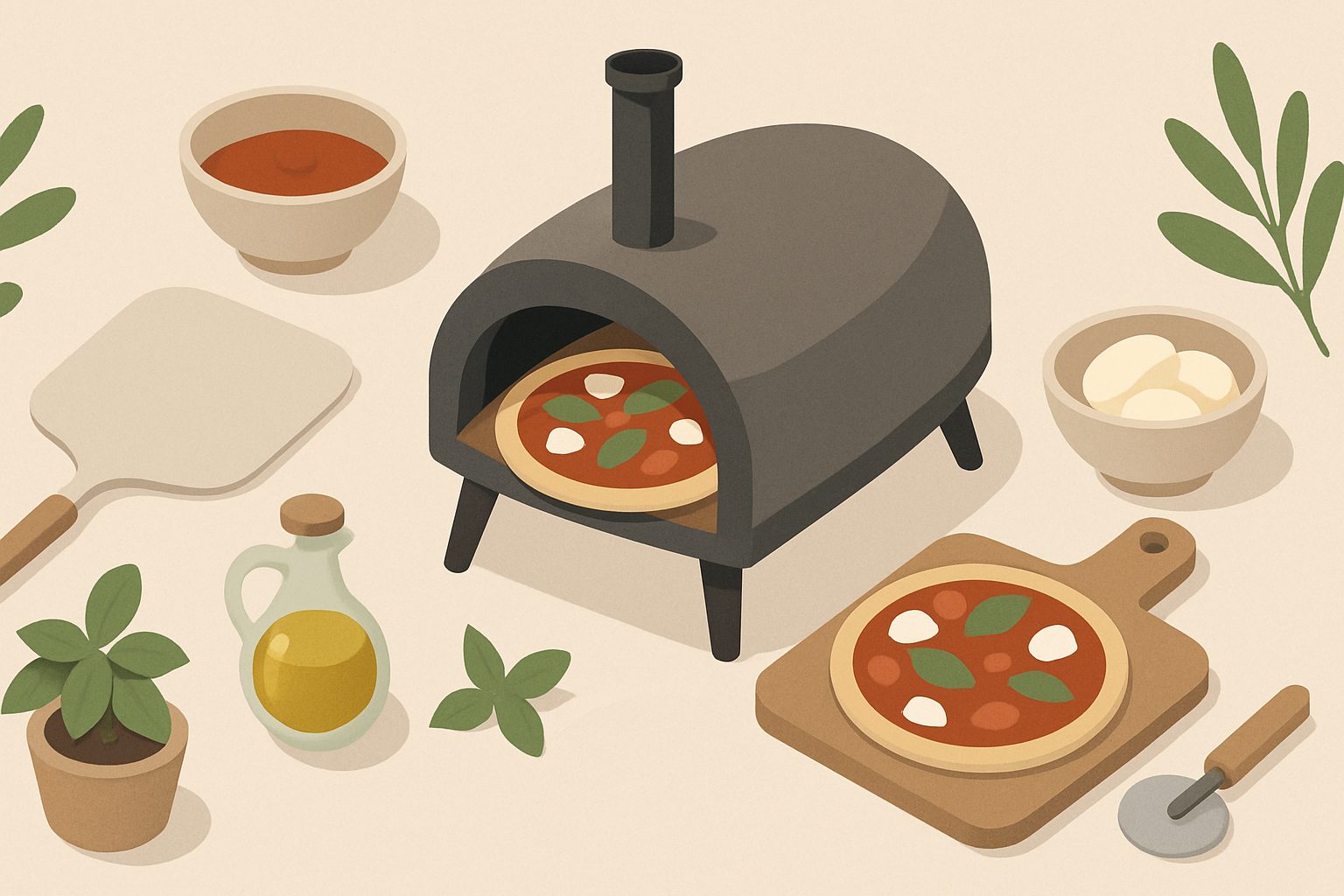
Pizza Oven vs BBQ UK: Which Should You Actually Buy for Your Garden?
If you're standing in your garden thinking about where to invest your money, the choice between a pizza oven and a BBQ is more than just aesthetics. Both take up space, cost serious money, and change how you use your garden—but they'll give you very different results and very different cooking experiences.
The honest answer is that they do different things well. A pizza oven makes genuinely brilliant pizza. A BBQ makes grilled food reliably, and does a hundred other things a pizza oven simply can't. What you actually need depends on what you'll cook, how often you'll use it, and what your garden can handle.
Cost: Where the Money Goes
A basic British BBQ—a decent gas model or a solid charcoal unit—will run you £300 to £800. A Weber kettle or a mid-range stainless steel gas grill sits in that sweet spot of £400-£600. That gets you something reliable that'll last years with basic maintenance.
A pizza oven is a different investment. A portable wood-fired unit starts around £600-£800, but those are mostly novelty-grade. If you want something that actually performs—proper stone dome, good insulation, manageable heat distribution—you're looking at £1,500 to £4,000. A built-in brick oven can run £3,000 to £8,000+ if you're paying for installation and building it into your garden properly.
The gap matters because a pizza oven is a commitment. You're not casually trying something; you're deciding this is a core feature of your garden for the next decade.
Space and Installation
A BBQ needs a flat spot and clearance around it. A small gas grill fits on a patio corner. Charcoal takes marginally more space. That's it. You can move a freestanding model, and most garden layouts can accommodate one without drama.
A pizza oven requires more thought. Portable wood-fired units still need a stable base and clearance above and around them (for smoke and heat). A built-in brick oven needs proper foundations, ideally a shelter or pergola to keep rain off, and permanent positioning. You're also dealing with: stacking stone or building brick, getting ventilation right, possibly integrating it into a larger structure like a covered outdoor kitchen.
If your garden is already tight, a pizza oven adds significant commitment and visual impact. A BBQ is essentially invisible until you're using it.
What You'll Actually Cook
Here's where honesty matters.
A pizza oven makes exceptional pizzas once you get past the learning curve. Fired wood-fired ovens reach 300-400°C. That heat cooks a pizza in 60-90 seconds with a properly leopard-spotted crust and bubbling, charred edges. If you love wood-fired pizza, this is what you want, and a BBQ won't replicate it.
Pizza ovens also handle roasted vegetables, bread, some meats, and even slow-cooked stews if you manage the temperature. But that's secondary. It's a pizza specialist that can do other things, not a general cooker.
A BBQ handles grilled meats, fish, vegetables, and kebabs brilliantly. Gas BBQs are predictable and easy—set a temperature, cook reliably. Charcoal needs more skill but gives you better flavour and temperature range. You can sear steaks at high heat, slow-cook ribs low and slow, smoke joints, grill delicate fish, throw on vegetables. It's genuinely versatile.
The real question: how often do you eat pizza at home? If the answer is "once a month if we're lucky," a pizza oven is an expensive specialist tool. If it's "twice a week in summer, and we'd do it more if we could," it starts to make sense.
Quality of Results
A wood-fired pizza oven produces something you genuinely can't achieve in a kitchen oven or conventional BBQ. The intense radiant heat from the dome, the open flame, the wood smoke—there's no shortcut to that flavour and texture.
A BBQ produces excellent grilled food, but it's a familiar result. You've had it before at restaurants and mates' gardens. It's reliably good, not transformative.
Maintenance and Effort
A BBQ: occasional cleaning, refill gas bottles or buy charcoal, cover when it rains. Dead simple.
A pizza oven: wood storage and management, ash removal, more demanding cleaning (you can't just hose it down), and care to avoid cracking (particularly with temperature swings in UK winters). Wood-fired ovens need seasoning when new. Built-in brick ovens benefit from occasional sealing. If something goes wrong—cracks in the dome, failed mortar—repairs aren't DIY-friendly and aren't cheap.
A pizza oven demands more attention and respect.
So Which One?
Choose a BBQ if:
- You grill regularly but pizza isn't a weekly thing
- Your garden space is limited
- You want low-maintenance, reliable cooking
- You value flexibility (grilling everything from fish to vegetables to steaks)
- You want to spend £400-£800 and call it done
Choose a pizza oven if:
- You love wood-fired pizza and will use it regularly (twice a month minimum)
- You have the space and can commit to a built structure or large portable unit
- You're willing to learn proper technique and temperature management
- You see it as a garden centrepiece, not just a tool
- You're prepared to spend £1,500+ and maintain it properly
Most UK gardens work better with a BBQ. It's more practical, more versatile, and fits easier into how people actually use their space. A pizza oven is brilliant, but only if pizza is genuinely your priority.
If you've decided a pizza oven is what you want, our budget guide walks you through realistic costs and build options—and our roundup compares the best pizza ovens actually available in the UK market.
More options
- Ooni Pizza Ovens & Accessories (Amazon UK)
- Gozney Pizza Ovens (Amazon UK)
- Pizza Oven Tools & Accessories Bundle (Amazon UK)
- Kiln Dried Hardwood & Pizza Oven Pellets (Amazon UK)
- Ninja Woodfire & Budget Pizza Ovens (Amazon UK)